

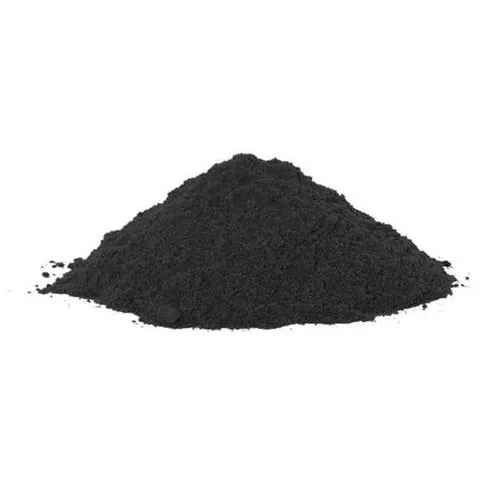

AGRM brings years of expertise in graphite material production, featuring advanced graphite powder processing technology and a dedicated processing workshop. We offer high-quality graphite powder in various particle sizes, including high purity, standard, and ultra-fine options, with physical and chemical properties that significantly exceed industry standards.
Our graphite powder is entirely free of impurities, fully meeting customer requirements for graphite solutes. Since 2012, we have been the exclusive supplier of graphite powder to China's largest aluminum manufacturer, delivering over 8,000 tons annually.
Graphite powder, a mineral powder primarily composed of carbon, is soft with a black-gray color and a greasy texture that can mark paper. Its hardness ranges from 1 to 2, increasing to 3 to 5 vertically with higher impurity levels. With a specific gravity of 1.9 to 2.3, it boasts a melting point above 3000 degree under oxygen-free conditions, making it one of the most heat-resistant minerals. Graphite powder is chemically stable at room temperature, insoluble in water, dilute acids, dilute alkalis, and organic solvents. Its high-temperature resistance and electrical conductivity make it ideal for use in refractory materials, conductive materials, and wear-resistant lubricants.

|
Greater than or equal to 98.5% |
0~1mm |
Ton bag/25 kg bag |
|
|
Less than or equal to 0.5% |
|||
|
Less than or equal to 0.2% |
|||
|
Less than or equal to 0.5% |
|||
|
Less than or equal to 0.8% |
|||
|
Less than or equal to 120uΩ·m |
|
|
|
Graphite powder is highly sensitive to its environment, causing its resistivity to vary. As one of the best non-metallic conductive materials, its resistance changes based on the coarseness and environmental conditions. Graphite's unique structure grants it several notable properties:
High-Temperature Resistance: Graphite has a melting point of 3850±50 degree and a boiling point of 4250 degree . Even under extreme heat, it experiences minimal weight loss and has a low thermal expansion coefficient. Its strength doubles at 2000 degree .
Graphite conducts electricity at levels 100 times greater than other non-metallic minerals, and its thermal conductivity surpasses metals like steel and iron. However, its thermal conductivity decreases with rising temperatures, eventually making it an insulator at extremely high temperatures.
The lubricating property of graphite depends on flake size-the larger the flakes, the better the lubricity due to a lower friction coefficient.

Graphite and its derivatives are known for their exceptional high-temperature resistance and strength, making them ideal for use in the metallurgical industry. They are commonly used to manufacture graphite crucibles and serve as protective agents for steel ingots and linings in metallurgical furnaces during steelmaking.
Wear-Resistant Lubricating Materials: Graphite's lubricating properties are highly valued in the machinery industry, particularly in conditions where conventional lubricating oils fail, such as high-speed, high-temperature, and high-pressure environments. Graphite-based wear-resistant materials can function without lubricating oil, even at sliding speeds under temperatures ranging from 200 degree to 2000 degree . Additionally, graphite materials are extensively used in equipment transporting corrosive media, where they are crafted into piston cups, seals, and bearings, eliminating the need for lubricating oil. Graphite emulsion also serves as an effective lubricant in metal processing applications like wire and tube drawing.

Populaire tags:


